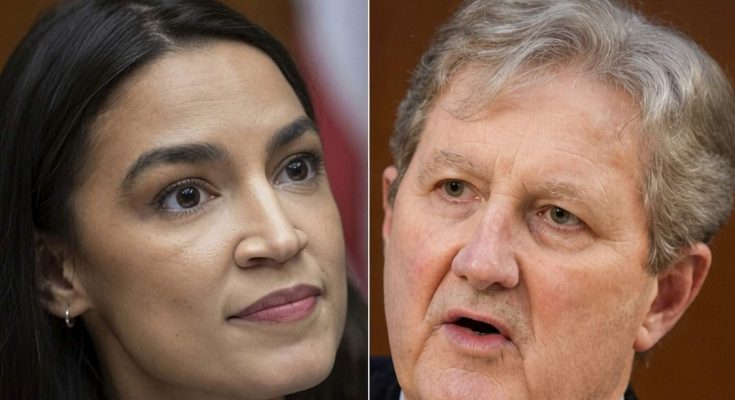
across the chamber, her voice cutting through the air like a blade. Conversations died mid-sentence as she leaned forward, a razor-thin smile hinting she was ready to torch Sen.
AOC’s smile flickered for a split second
He stood deliberately, locking eyes with her in a stare so steady
it felt preloaded with impact. The tension coiled tight enough to snap. “You want embarrassment?
” he replied evenly, stepping toward the microphone with unhurried confidence. “Try surviving this. ” A murmur rolled through the Senate—equal parts shock and anticipation.
Then Kennedy dropped a verbal grenade that detonated into audible gasps, scattered laughter, and stunned silence. Reporters pounded their keyboards as if racing a deadline siren.
In less than half a minute, the energy shifted: AOC bristling, Kennedy composed, and the entire chamber crackling with electric disbelief.
A tense atmosphere gripped the Senate chamber as a heated exchange erupted
setting the stage for his critique
between Alexandria Ocasio-Cortez and John Kennedy, captivating a packed gallery of lawmakers and reporters. The confrontation, rooted in a simmering policy disagreement, escalated into personal barbs, drawing immediate silence from both sides of the aisle.
Kennedy, known for his measured demeanor, remained composed, slowly rising to deliver a dramatic counterstatement that asked, “You want embarrassment? ” setting the stage for his critique.
The Louisiana senator targeted perceived inconsistencies in Ocasio-Cortez’s policy positions with pointed sarcasm, prompting a mixture of stunned silence and restrained laughter. This cinematic standoff quickly transformed routine legislative debate into headline-making drama, rapidly circulating across social media platforms. Political commentators framed the episode as emblematic of generational tension within Congress, contrasting Ocasio-Cortez’s assertive style with Kennedy’s understated delivery.
It underscored deep ideological divisions shaping debates over fiscal priorities and social programs, reflecting a pattern of escalating rhetoric in Washington D. C.
The incident, despite procedural business resuming, resonated beyond the chamber, prompting extensive media analysis. Communications experts noted that such high-profile confrontations reinforce existing support bases and harden opposition, reflecting a shift towards performative politics in the digital age.
This vivid encounter illustrates how rhetoric powerfully shapes perception, serving as a rallying point and a reminder of the spectacle inherent in contemporary American politics.